





Reproductive system
System of organs that are involved in creation of offspring
They are very diverse in animals
Asexual reproduction:
The creation of offspring where only 1 parent organism is involved
The offspring shares all of the DNA that is unmutated
Sexual reproduction:
The creation of offspring where 2 parent organisms are involved
The offspring here is genetically distinct from both parents
Gamete:
Also called sex cells
They are haploid cells and formed through meiosis
These are 2 types of gametes, the ovum and the sperm
When both types of gametes are made by the same species and fuse then they develop into a zygote and undergo development into an offspring
Ovum:
It is called the egg in animals and the ovule in plants
Large cell that takes a lot of energy to make and isn't very mobile
Sperm:
Smaller, more plentiful gamete that is very mobile
Hermaphroditic species:
Species that make both types of sex cells
Species which produce only one type of sex cells are called gonochoric
Genitals:
External sex organs
Females:
Members of a species that produce big and less mobile gametes
Males:
Members of a species that produce smaller and more mobile gametes
Gonads:
Glands which make gametes
This is the collective term for testes and ovaries
Sex determination:
In non-hermaphroditic species sex determination is either genetic or environmental
In mammals and some other animals and plants, 2 of the same sex chromosome produces females and 2 different sex chromosomes produces males
In birds, 2 of the same sex chromosome produces males and 2 different sex chromosomes produces females
In sea turtles sex determination is based on temperature, warmer temperatures produce females and warmer temperatures produce males
In mammals the embryo will develop female structures if only 1 chromosome is present
Secondary sexual characteristics:
During puberty animals will develop characteristics dependent on their sex
In humans,
males will usually develop facial hair
Both sexes gain pubic hair, muscle and fat get redistributed
In other animals secondary sexual characteristics include manes on lions, antlers on male deer, colorful feathers on male peacocks
Female reproductive system in humans:
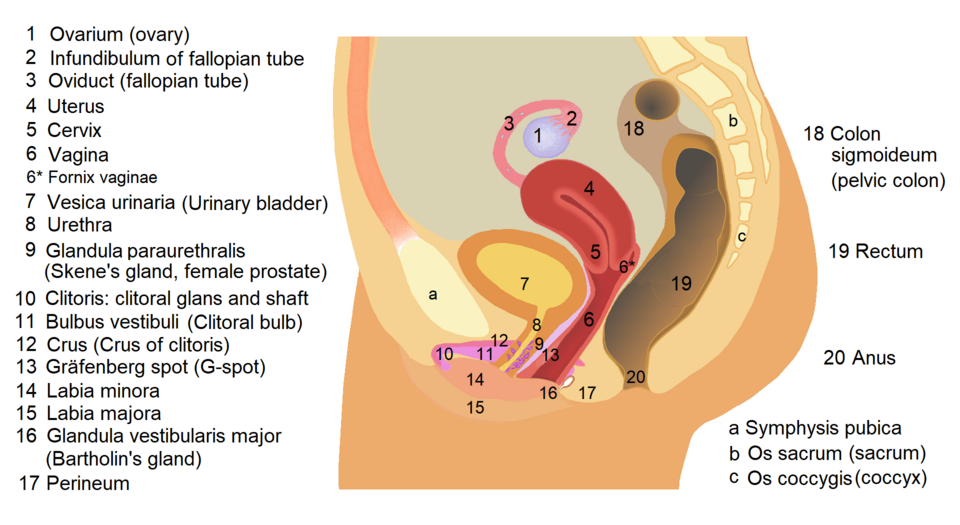
There are 2 ovaries on either side of the uterus
Eggs are kept in ovaries
All eggs are present at birth and are immature
Oviducts/Fallopian tubes connect the ovaries to the uterus
Menstrual cycle:
Every 4 weeks an egg matures in the ovary
This egg releases into the fallopian tube, this is called ovulation
Ovulation occurs around day 14
Estrogen stimulates the endometrium to harden
If implantation of the egg onto the endometrium doesn't occur{all unfertilized eggs and 70% of the fertilized eggs that don't attach to the endometrium} then the endometrium will shed and be released from the body
The shed endometrium leaves through the narrow cervix and through the muscle lined vagina
Fertilization:
Fertilization occurs in the fallopian tube around 24 hours after the start of ovulation
Around 70% of fertilized eggs don't attach to the endometrium
Around 6 days after fertilization, the fertilized egg{zygote} implants onto the lining of the uterus called the endometrium
Placenta:
Around 7 to 10 days after fertilization, the placenta forms
The placenta performs many functions, it
- supplies nutrition to the embryo,
- removes waste products from the embryo,
- helps protect the embryo,
- produce hormones for embryonic growth and
- passes immunity to the baby
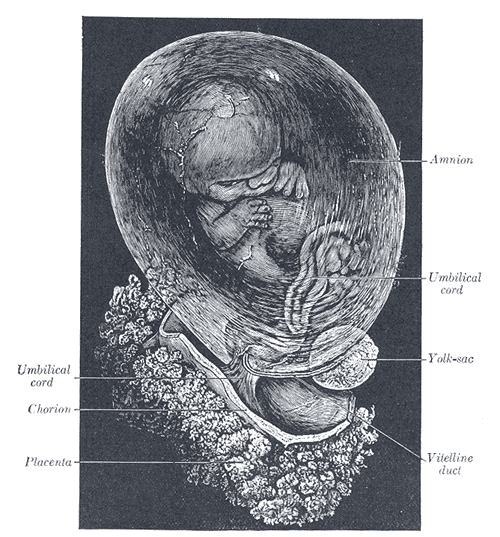
It uses the umbilical cord to deliver the nutrients and oxygen to the embryo
Amniotic fluid:
It is a fluid containing water, nutrients, antibodies and hormones
It helps,
- Protect embryo from infection
- Cushions and helps the embryo's movement
- Helps development of the embryo's muscles and bones
- Prevents compression of umbilical cord
- Helps the embryo's digestive and respiratory systems
- Contains antibodies to help provide immunity
- Regulates the embryo's body temperature
- Protect from the mother's movement
Male reproductive system in humans:
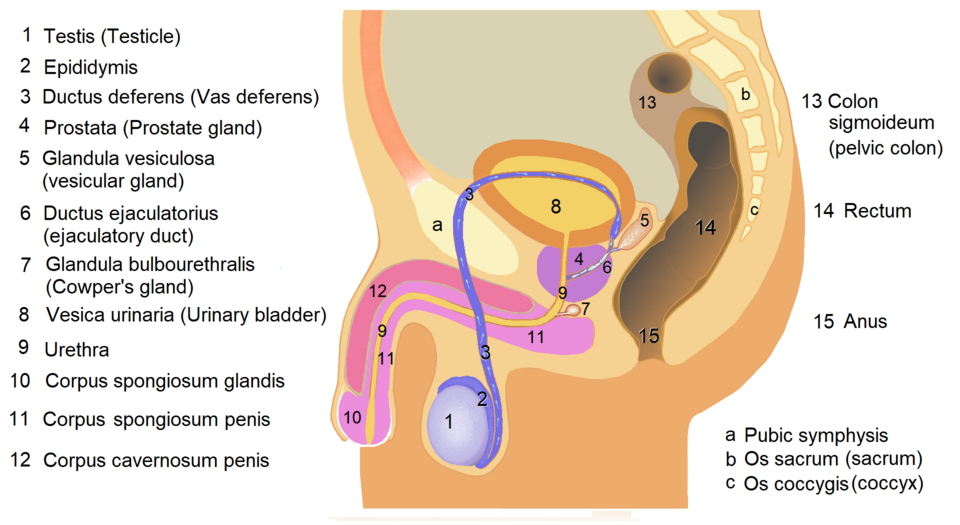
The testes are made of a bunch of coiled tubes called seminiferous tubules
Sperm form in the seminiferous tubules
The testes are outside the body and need to be around 2°C cooler than the body to make sperm
The testes are present in a pouch called the scrotum
Sperm spend 3 weeks coiled in tubes called epididymis present in the scrotum
Sperm mature in the epididymis and grow a flagella{The tail of the sperm}
The flagella help the sperm move
The penis is an organ that contains the urethra and also releases sperm
The process of release of sperm is called ejaculation or emission
During ejaculation, mature sperm are carried by muscular contractions
They travel from the epididymis through muscular ducts called the vas deferens
The vas deferens carries the sperm over the bladder an past the seminal vesicles
The seminal vesicles along with the prostate gland provide fluid containing mucus, coagulating enzymes, ascorbic acid and sugars needed for the trip
This fluid is called the semen
The semen travels down the ejaculatory ducts to the urethra and is ejaculated from the body through the penis
Before ejaculation, the penis fills with blood and stiffens
The interaction between the male and female sex organs is called coitus